



ITB syndrome treatment
Are you experiencing ITB Syndrome pain that just won’t seem to go away?
Schedule an Appointment
Iliotibial Band (ITB) Syndrome is a common condition that affects the last section of the fascia lata, known as the iliotibial band, causing inflammation and pain. This syndrome is most commonly seen in athletes who participate in sports that involve repetitive knee flexion and extension movements, such as football, running, and cycling. The main symptom of ITB syndrome is pain on the lateral side of the knee, which can also be accompanied by swelling at the insertion points of the tendons. This can make it difficult or impossible for individuals to continue participating in their sport.
The cause of ITB syndrome is often related to overloading of the joints or training on hard or irregular surfaces. Additionally, certain anatomical factors such as varus knee and hypo-extensibility of the posterior muscular chain can also increase the risk of developing this condition. The diagnosis is primarily based on clinical examination, but ultrasound can also be used to confirm the diagnosis and determine the degree of inflammation.
Iliotibial Band (ITB) Syndrome Pain Treatment
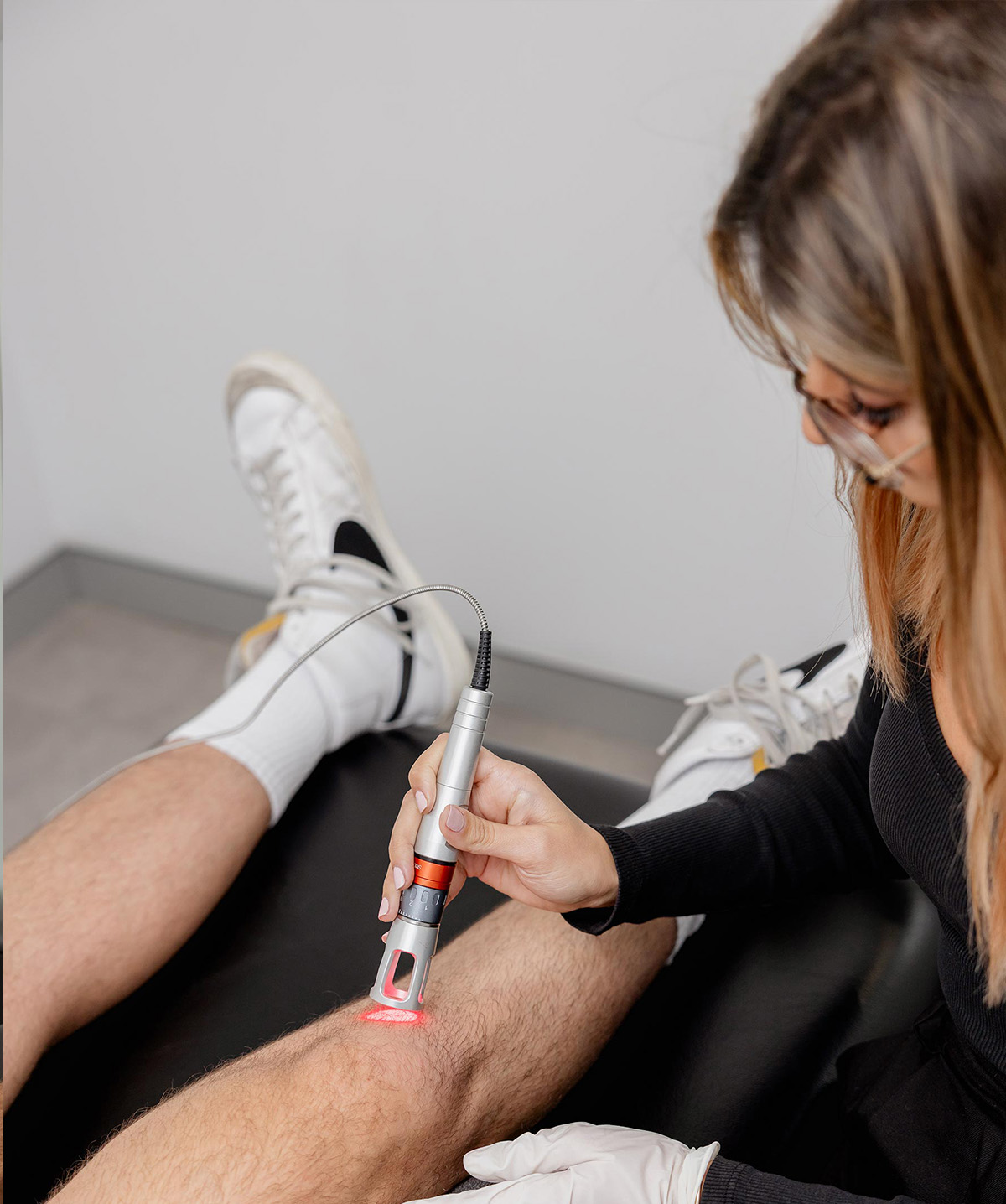
Treatment for ITB syndrome is typically conservative and includes a combination of manual therapy and high-level laser therapy. In the acute phase, it may be necessary to reduce, change, or suspend sporting activity depending on the severity of the condition. The goal of treatment is to reduce pain and inflammation, improve range of motion and flexibility, and prevent recurrence of the condition. Manual therapy and rehabilitation exercises are also important to help the individual regain full function and return to their sport or activity.
Working with you on iliotibial band (ITB) syndrome pain
- Goals: Pain relief, improved mobility, better posture and become more functional.
- Problems: What are you experiencing? What is limiting you? How does this impact your life?
- Diagnosis: An in-depth diagnosis following a comprehensive history and examination including in-clinic orthopedic, neurological and functional assessments.
- Design: Your own personalised treatment plan. No one person is the same and you’re not a textbook. Our goal is to arm you with knowledge and awareness so you can better understand your body.
- Doing: Implementing of our modern treatment framework, which is designed to assist you in your recovery.
Let's Talk ...
Shop 3B/9 George St, North Strathfield NSW 2137
Monday 8am - 6pm
Tuesday 8am - 7pm
Wednesday 8am - 6pm
Thursday 8am - 8pm
Friday 8am - 5:30pm
Saturday 7am - 1:30pm

Frequently Asked Questions: Iliotibial Band (ITB) Syndrome
What causes IT band syndrome?
IT band syndrome is caused by repetitive friction of the iliotibial band against the lateral femoral epicondyle. It’s most common in runners, cyclists, and hikers. Contributing factors include rapid training load increases, weak hip abductors, poor running biomechanics, and leg length discrepancy.
How long does IT band syndrome take to heal?
Mild cases can resolve in 4–8 weeks with appropriate treatment and activity modification. More severe cases or those with underlying biomechanical issues may take 3–6 months. Early intervention and addressing the root cause significantly speeds up recovery.
Can I keep exercising with IT band syndrome?
Activity modification — not complete rest — is usually recommended. Low-impact activities like swimming or stationary cycling are often well tolerated. Running through pain is not advised as it delays healing. Your chiropractor can help create a modified training plan during recovery.
What treatments are most effective for IT band syndrome?
Evidence-based treatments include soft tissue therapy, dry needling, hip and glute strengthening exercises, running gait retraining, and load management. At Continuum Health & Performance we take a whole-body approach to identify and address the underlying cause of your ITB pain.
Can stretching alone fix IT band syndrome?
Stretching the IT band alone is rarely sufficient. The IT band is a thick band of connective tissue that doesn’t lengthen much with stretching. Research supports a combination of hip strengthening, load management, and soft tissue therapy as far more effective.
How We Treat ITB Syndrome
At Continuum Health & Performance, we use a combination of evidence-based treatments tailored to your condition and goals. Relevant treatments for itb syndrome include:
Related Conditions We Treat