



TMJ pain (TMD) treatment
Have you been told that you will have to live with a reduced jaw range of motion, severe pain and clicking/locking?
Schedule an Appointment
Who this is for
Jaw pain, clicking, locking, headaches tied to the jaw, or TMJ/TMD restriction affecting eating, sleep, or training. Book Matthew Hayward (AHPRA CHI0002229834). Matthew has a special interest in the clinical treatment of TMD conditions and is a member of ANZAOP and AAOP. We screen first. Dental work and bite splints stay with your dentist – we do not replace dental care.
What happens in a visit
How long is the appointment? Your first visit with Matthew Hayward usually runs about 45 – 60 minutes.
Will I be treated today? Usually yes. Once Matthew takes a comprehensive history and checks you’re safe to treat, he can get hands-on care started in the same visit.
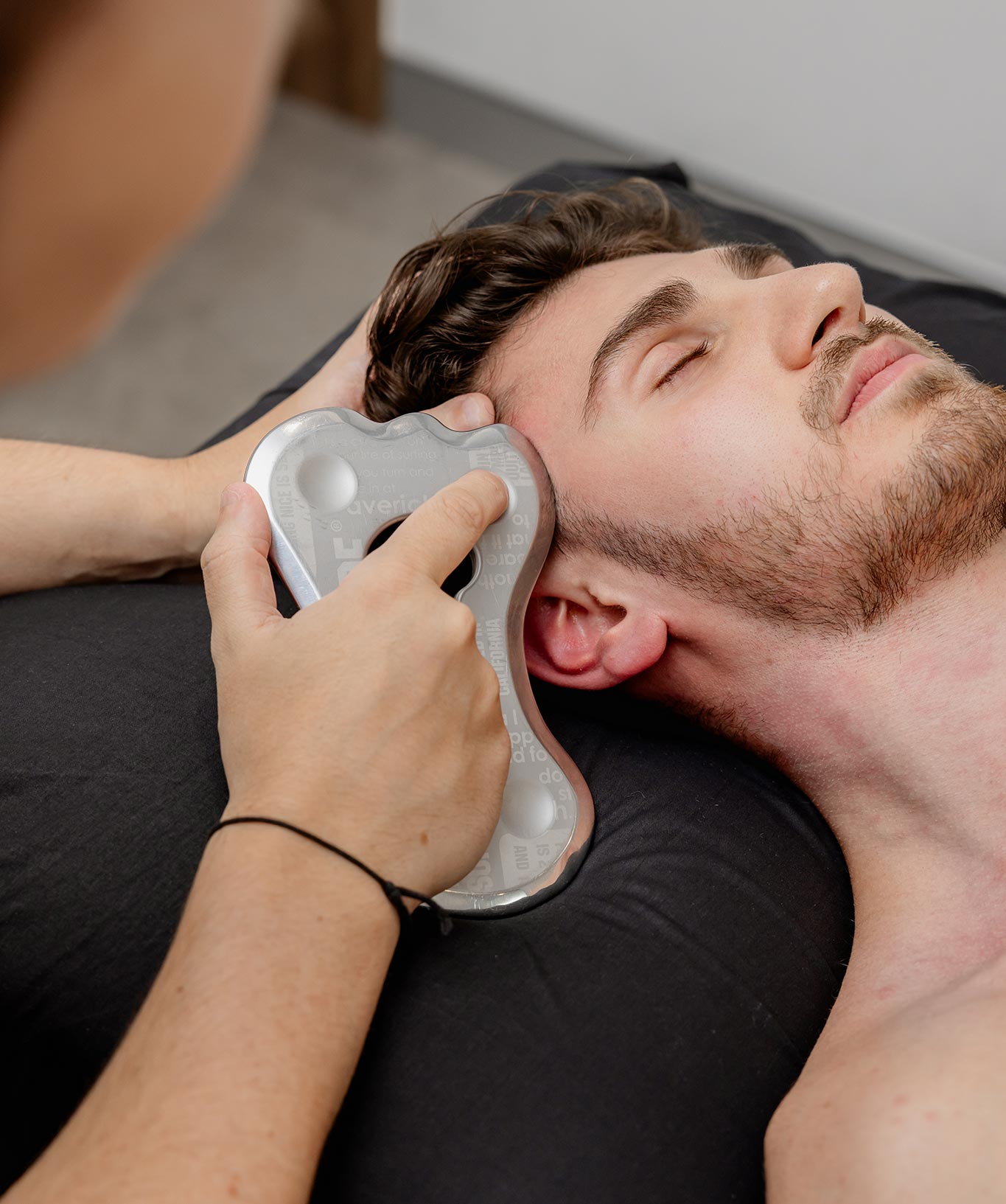
What will you do? Matthew will take a comprehensive history and examination, map the jaw complaint – pain, clicking, locking, or morning clench – and how it links to the neck and surrounding structures. He will then check you’re safe to treat before anything hands-on. From there he uses manual therapy and, where indicated, dry needling for the jaw and neck. If shared care with your dentist helps, he will say so. He does not replace dental care or fit bite splints.
What happens when I finish the appointment? You’ll leave with an understanding of what he found, what to do before the next visit, whether to loop your dentist in, and a next date if you need one.
What we won’t do. We won’t promise the jaw will be fixed in one visit, and we won’t replace your dental care.
Book Matthew Hayward for TMJ care, or call 0421 151 778.
Temporomandibular Joint (TMJ) pain, also known as TMD (temporomandibular disorder), is a common condition that affects the jaw joint and the muscles that control jaw movement. The TMJ is located next to the ear and is made up of the mandible (the lower jaw) and the temporal bone (the skull). This joint allows for movement such as talking, chewing, and yawning.
TMD can result from a variety of causes including, but not limited to, sleep-disordered breathing, stress, injury, arthritis, hypermobility, teeth grinding, and jaw misalignment.
Symptoms of TMD include pain or discomfort in the jaw, face, neck, and shoulders, as well as difficulty in opening or closing the jaw, clicking or popping sounds in the jaw, and headaches.
What separates our treatment at Continuum Health & Performance
Diagnosis of TMD is typically based on a patient’s symptoms and physical examination, but in some cases, imaging studies such as x-ray or MRI may be necessary to identify underlying issues. Typical treatment options vary depending on the cause of the TMD and can include manual therapy, medication, splints or bite guards, and in severe cases, surgery.
At Continuum Health & Performance, we have developed a specific TMD treatment protocol that entails high-level laser therapy, dry needling, myofascial release, and neurological rehabilitation to aid in our patient’s recovery. We also work closely with TMD specialists, providing our patients with immediate access to a high-level of care when referral is necessary. We often find various neurological and biomechanical dysfunctions in our patients, such as vestibular or myofascial weaknesses. These dysfunctions often go undiagnosed and are a key contributor in helping you feel pain relief and restoration of function.
Your session will entail a comprehensive assessment of one-hours duration and treatment on the first day.
Working with you on TMJ pain
- Goals: Pain relief, improved mobility, better posture and become more functional.
- Problems: What are you experiencing? What is limiting you? How does this impact your life?
- Diagnosis: An in-depth diagnosis following a comprehensive history and examination including in-clinic orthopedic, neurological and functional assessments.
- Design: Your own personalised treatment plan. No one person is the same and you’re not a textbook. Our goal is to arm you with knowledge and awareness so you can better understand your body.
- Doing: Implementing of our modern treatment framework, which is designed to assist you in your recovery.
Let's Talk ...
Shop 3B/9 George St, North Strathfield NSW 2137
Monday 8am - 6pm
Tuesday 8am - 7pm
Wednesday 8am - 6pm
Thursday 8am - 8pm
Friday 8am - 5:30pm
Saturday 7am - 1:30pm

How We Treat TMJ Pain
At Continuum Health & Performance, we use a combination of evidence-based treatments tailored to your condition and goals. Relevant treatments for tmj pain include:
Frequently Asked Questions: TMJ Pain (TMD)
What causes TMJ pain?
TMJ pain can result from multiple factors: bruxism (teeth grinding or clenching), jaw muscle tension from stress, direct trauma to the jaw, disc displacement within the joint, arthritis, or malocclusion (poor bite alignment). Often several of these factors overlap, making a thorough assessment important.
What are the symptoms of a TMJ disorder?
Symptoms include jaw pain or tenderness, a clicking or popping sound when opening or closing the mouth, limited jaw opening, headaches at the temples, earaches, facial pain, neck pain, and sometimes tooth pain. Symptoms are often worse in the morning from overnight grinding or after prolonged chewing.
Can TMJ dysfunction be treated without surgery?
Yes – the vast majority of TMJ disorders respond well to conservative management. Surgery is rare and reserved for cases that have failed extensive conservative care. First-line treatments include jaw muscle exercises, manual therapy, dry needling, bite guards, and stress management. Most people achieve significant improvement without invasive intervention.
Is a mouth guard enough to treat TMJ pain?
Occlusal splints can reduce tooth damage from grinding and may relieve muscle tension, but they address symptoms rather than the root cause. For lasting relief, combining a splint with manual therapy, exercise, and addressing contributing factors like stress and posture typically produces much better outcomes.
How does chiropractic treatment help TMJ pain?
Chiropractors trained in TMJ dysfunction use manual therapy to address joint mobility, myofascial release on the jaw and neck muscles, dry needling for trigger points, and postural correction – as forward head posture places significant load on the TMJ. Many patients find that treating both the jaw and neck together is more effective than treating the jaw in isolation.
Further reading: TMJ disorder is more common than most people realise. Explore TMJ disorder statistics in Australia and learn about our non-traditional approach to TMJ dysfunction treatment that gets lasting results.
Related Conditions We Treat