



Tennis and golfer’s elbow treatment
Are you suffering from elbow pain that just won’t seem to go away?
Schedule an Appointment
Tennis Elbow, also known as lateral epicondylitis, is a painful condition that affects the lateral epicondyle, which is the bony protrusion of the humerus. This condition is caused by a series of microtraumas to the tendon in the wrist and the hand’s extensor muscles near where the tendon attaches to the epicondyle.
Golfer’s Elbow, also known as medial epicondylitis, is a similar condition but affects the medial epicondyle, the inside part of the elbow. This is caused by microtraumas to the flexor tendons of the hand and wrist.
Repetitive movements, such as those associated with playing sports like tennis or golf, or certain occupations like painting, hairdressing, or carpentry, can lead to this condition.
Problems with Tennis and Golfer’s Elbow are more prevalent in certain sports such as golf or tennis, or certain occupations like painters, hairdressers or carpenters. Generally speaking, this affects those in the 30-50 age range the most. Tennis elbow usually features pain localized to the outer region of the elbow at the epicondyle level, which may spread down the forearm and is exacerbated by extension and supination movements.
Tennis Elbow and Golfer’s Elbow Pain Treatment
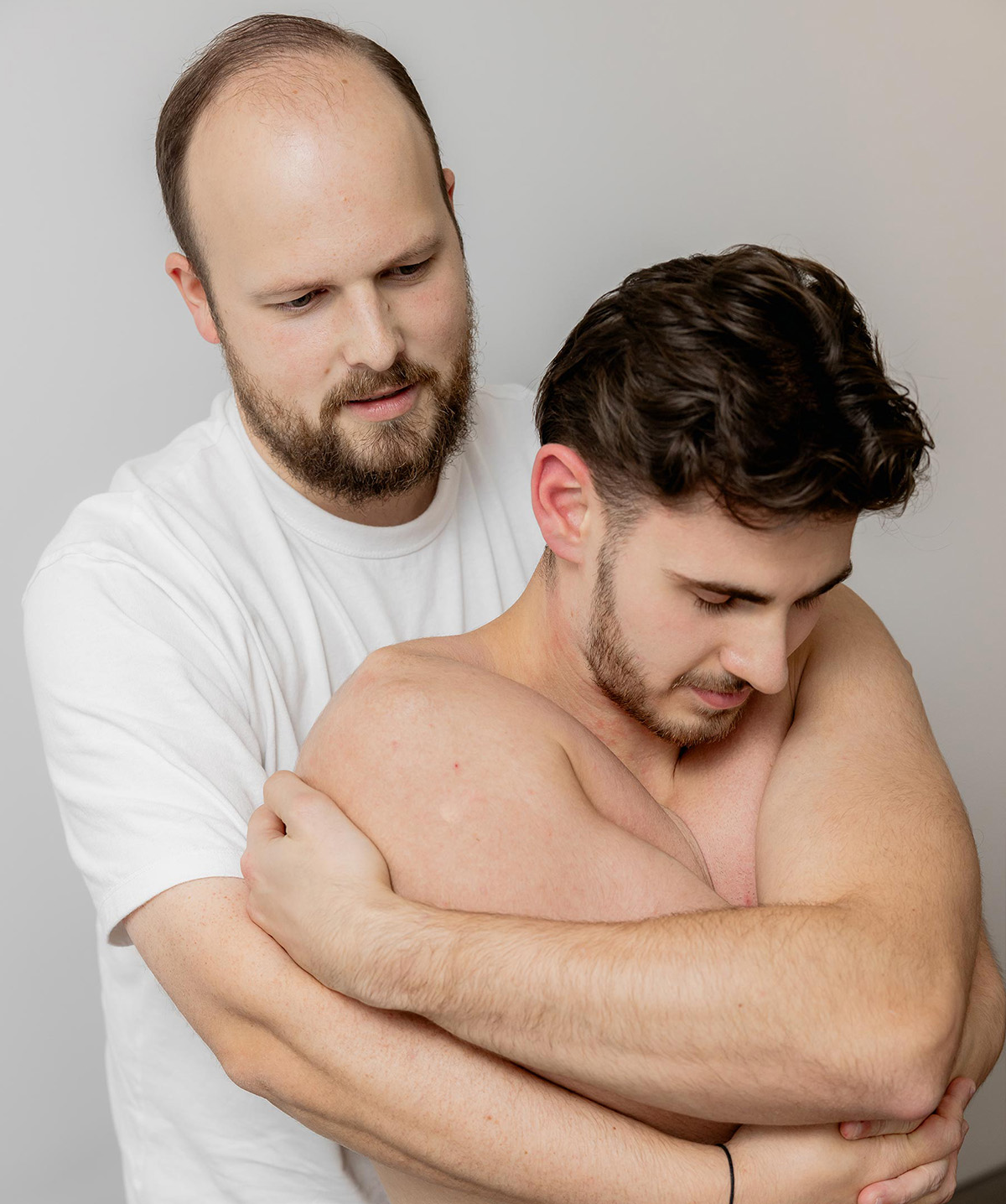
Diagnosis is clinical with support from ultrasound scans to assess the integrity of the tendon. Treatment plans focus on a period of manual therapy including muscle building exercises, stretching, massage, high-level laser therapy and dry needling. In rare cases where rehabilitation is unsuccessful, the tendon can be operated on arthroscopically (keyhole surgery) – however it should be noted the vast majority of cases resolve without the need for surgery. It’s important to be aware of the symptoms of tennis and golfer’s elbow and to seek medical attention in case you suspect you might be suffering from it. Early diagnosis and treatment can prevent the condition from worsening and help you to regain your arm and elbow mobility.
Working with you on Tennis and Golfer’s Elbow pain
- Goals: Pain relief, improved mobility, better posture and become more functional.
- Problems: What are you experiencing? What is limiting you? How does this impact your life?
- Diagnosis: An in-depth diagnosis following a comprehensive history and examination including in-clinic orthopedic, neurological and functional assessments.
- Design: Your own personalised treatment plan. No one person is the same and you’re not a textbook. Our goal is to arm you with knowledge and awareness so you can better understand your body.
- Doing: Implementing of our modern treatment framework, which is designed to assist you in your recovery.
Let's Talk ...
Shop 3B/9 George St, North Strathfield NSW 2137
Monday 8am - 6pm
Tuesday 8am - 7pm
Wednesday 8am - 6pm
Thursday 8am - 8pm
Friday 8am - 5:30pm
Saturday 7am - 1:30pm
How We Treat Tennis Elbow
At Continuum Health & Performance, we use a combination of evidence-based treatments tailored to your condition and goals. Relevant treatments for tennis elbow include:
Frequently Asked Questions: Tennis Elbow
What is tennis elbow and what causes it?
Tennis elbow (lateral epicondylalgia) is a painful condition affecting the tendons that attach to the outside of the elbow. Despite the name, only about 5% of cases are caused by tennis. It typically develops from repetitive forearm and wrist movements — common in tradespeople, desk workers, and those performing heavy gripping activities.
How do I know if I have tennis elbow?
The classic presentation is pain and tenderness over the outer elbow that worsens with gripping, lifting, or activities involving forearm rotation (like turning a screwdriver or shaking hands). Pain can radiate down the forearm. Specific clinical tests like Cozen’s and Mill’s test can confirm the diagnosis without imaging.
Does tennis elbow heal without treatment?
Tennis elbow can resolve spontaneously, but this may take 1–2 years. Evidence shows that active treatment — particularly progressive exercise rehabilitation targeting the forearm extensors — leads to faster and more durable recovery than rest or passive approaches alone.
What is the best treatment for tennis elbow?
The best evidence supports eccentric and isometric forearm exercises combined with load management. Manual therapy provides short-term pain relief. Corticosteroid injections offer quick relief but are associated with higher recurrence rates and worse long-term outcomes than exercise-based approaches.
Can I keep working with tennis elbow?
In most cases yes — with modifications. Temporarily reducing the most provocative activities, using ergonomic tools, wearing a counterforce brace for symptom management, and starting a rehabilitation programme allows most people to continue working. Complete rest is generally counterproductive for tendon recovery.
Related Conditions We Treat