



Shoulder impingement treatment
Are you experiencing a pain in the front of your shoulder that just won’t seem to go away?
Schedule an Appointment
The subacromial space is a crucial area in the shoulder joint that is located between the humeral head and acromion. It houses the tendons of the rotator cuff, which are essential for the proper functioning of the shoulder joint. These tendons are also protected by a bursa, a small fluid-filled sac that helps to reduce friction and protect the tendons.
Every time the upper arm is lifted overhead, there is a natural narrowing of the subacromial space. This increased pressure on the tendons and bursa can lead to injury if the space is narrowed too much or too often. Activities such as sports or everyday activities that require repetitive overhead movements, rotator cuff muscle imbalances, or irregularities in the acromion’s shape can all contribute to increased friction in this space. This can lead to the formation of calcium deposits within the subacromial space.
The most commonly affected tendon in these types of injuries is the supraspinatus tendon due to its location. When the supraspinatus tendon is damaged, it can cause feelings of weakness and pain in the shoulder, often most felt at night-time. This pain can lead to a lack of movement, which can perpetuate the injury as the joint becomes more and more stiff through under-use. Previous injuries or “wear and tear” to the shoulder joint can also further complicate subacromial impingement syndrome as it can further contribute to pain and dysfunction.
Subacromial Impingement Syndrome Treatment
Quick and correct diagnosis followed by an early start to rehabilitation and treatment is key to addressing subacromial space injuries. By stopping the vicious cycle of pain and stiffness, rehabilitation can be faster and more effective. This approach also negates the need for prolonged courses of anti-inflammatory drugs, as well as preventing secondary damage to the joint through the adoption of bad postures or movement patterns. In cases of large calcific deposits, or complete tears of the rotator cuff tendon, surgery may be required. Regardless if surgical intervention is required, rehabilitation always plays an important role to correct underlying biomechanical dysfunctions and reduce the risk of future re-injury.
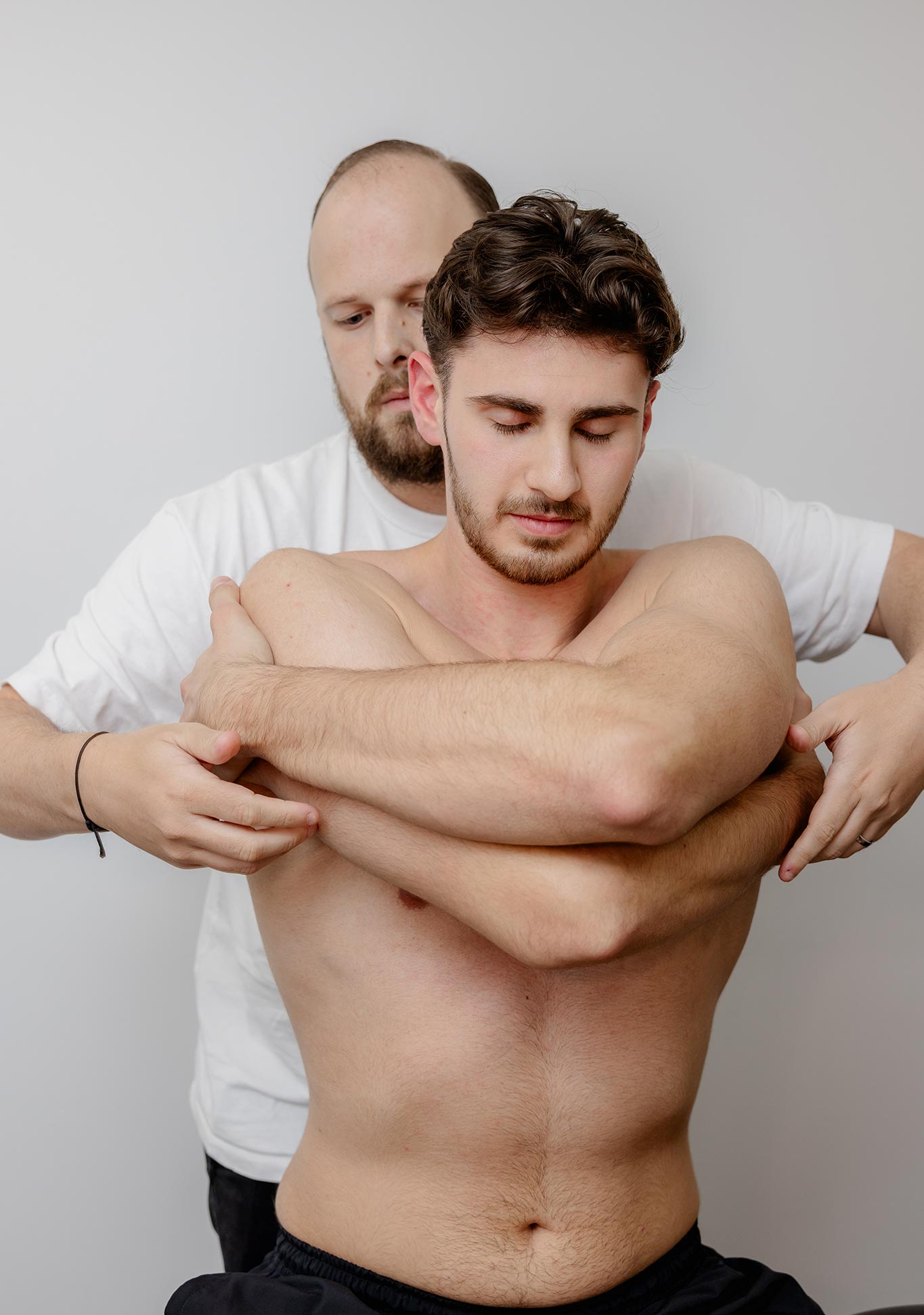
Manual therapy, exercises, and high-level laser therapy can be used to alleviate symptoms and promote healing. Working with an experienced practitioner is vital to ensure that an appropriate and individualised treatment plan is put in place to address your specific needs. With the right diagnosis and treatment, subacromial space injuries can be managed and controlled, allowing you to return to the activities you love without being held back by shoulder pain.
Working with you on subacromial impingement syndrome
- Goals: Pain relief, improved mobility, better posture and become more functional.
- Problems: What are you experiencing? What is limiting you? How does this impact your life?
- Diagnosis: An in-depth diagnosis following a comprehensive history and examination including in-clinic orthopedic, neurological and functional assessments.
- Design: Your own personalised treatment plan. No one person is the same and you’re not a textbook. Our goal is to arm you with knowledge and awareness so you can better understand your body.
- Doing: Implementing of our modern treatment framework, which is designed to assist you in your recovery.
Let's Talk ...
Shop 3B/9 George St, North Strathfield NSW 2137
Monday 8am - 6pm
Tuesday 8am - 7pm
Wednesday 8am - 6pm
Thursday 8am - 8pm
Friday 8am - 5:30pm
Saturday 7am - 1:30pm
How We Treat Shoulder Impingement
At Continuum Health & Performance, we use a combination of evidence-based treatments tailored to your condition and goals. Relevant treatments for shoulder impingement include:
Frequently Asked Questions: Shoulder Impingement
What is shoulder impingement syndrome?
Shoulder impingement occurs when the tendons of the rotator cuff and the subacromial bursa become compressed between the head of the humerus and the acromion — the bony arch above the shoulder joint. This causes pain, particularly with overhead activities, and is one of the most common shoulder complaints.
What does shoulder impingement feel like?
The characteristic symptom is a ‘painful arc’ — pain occurring when raising the arm between roughly 60 and 120 degrees, with relative relief below and above this range. Pain is typically felt at the front or outer side of the shoulder and may radiate into the upper arm. Night pain when lying on the affected side is also common.
Can shoulder impingement be treated without surgery?
Yes — the vast majority of shoulder impingement cases resolve with conservative management. Exercise rehabilitation targeting rotator cuff strength and scapular control is the cornerstone of treatment. Research shows outcomes from surgical decompression are no better than well-structured exercise rehabilitation in most cases.
What causes shoulder impingement to develop?
Impingement often develops from a combination of factors: rotator cuff weakness, poor scapular control, tight posterior shoulder capsule, overuse in overhead positions, and sometimes bony changes (a hooked acromion). Posture and thoracic mobility also play a contributing role.
How long does shoulder impingement take to recover?
With consistent rehabilitation, most people experience significant improvement within 6–12 weeks. Full recovery and return to overhead sport or heavy pressing may take 3–6 months. Without addressing underlying muscle imbalances, symptoms tend to recur.
Further reading: Shoulder impingement and bursitis frequently go hand in hand. Read what bursitis actually means for your shoulder and our practical guide on how to relieve shoulder pain and prevent future injuries.
Related Conditions We Treat