



Frozen shoulder treatment
A frozen shoulder diagnosis can be confronting for some, we can work with you to improve your function.
Schedule an Appointment
Adhesive Capsulitis of the Shoulder, also known as “Frozen Shoulder,” is a condition that arises when the glenoid and humeral head adhere to each other, causing a progressive restriction and loss of movement in the shoulder as the joint capsule thickens. This condition is most commonly observed in individuals between the ages of 40 and 60, females, and those with diabetes. Interestingly, it is commonly observed that frozen shoulder is often the first presentation of late-onset diabetes. Patients will often report pain and dysfunction affecting the left shoulder more than the right and without prior knowledge of previous trauma or injury.
Frozen Shoulder tends to advance in three stages:
The Cooling Stage:This stage is marked by widespread discomfort in the shoulder that gets worse with motion and limits the use of the arm. Many patients want to keep their arm out of use and protect it, but doing so actually makes things worse since it promotes the joint capsule to continue expanding.
The Freezing Stage: Throughout this stage, discomfort will gradually worsen and your stiffness will get worse. The humeral head area may have more intense localised pain that worsens over the night, making it difficult to fall asleep. Normally, this stage lasts six to nine months.
The Thawing Stage: Commonly, range of motion will gradually improve at this stage. But, in some circumstances, it can take up to two years before you have whole joint movement again.
Frozen Shoulder Pain Treatment
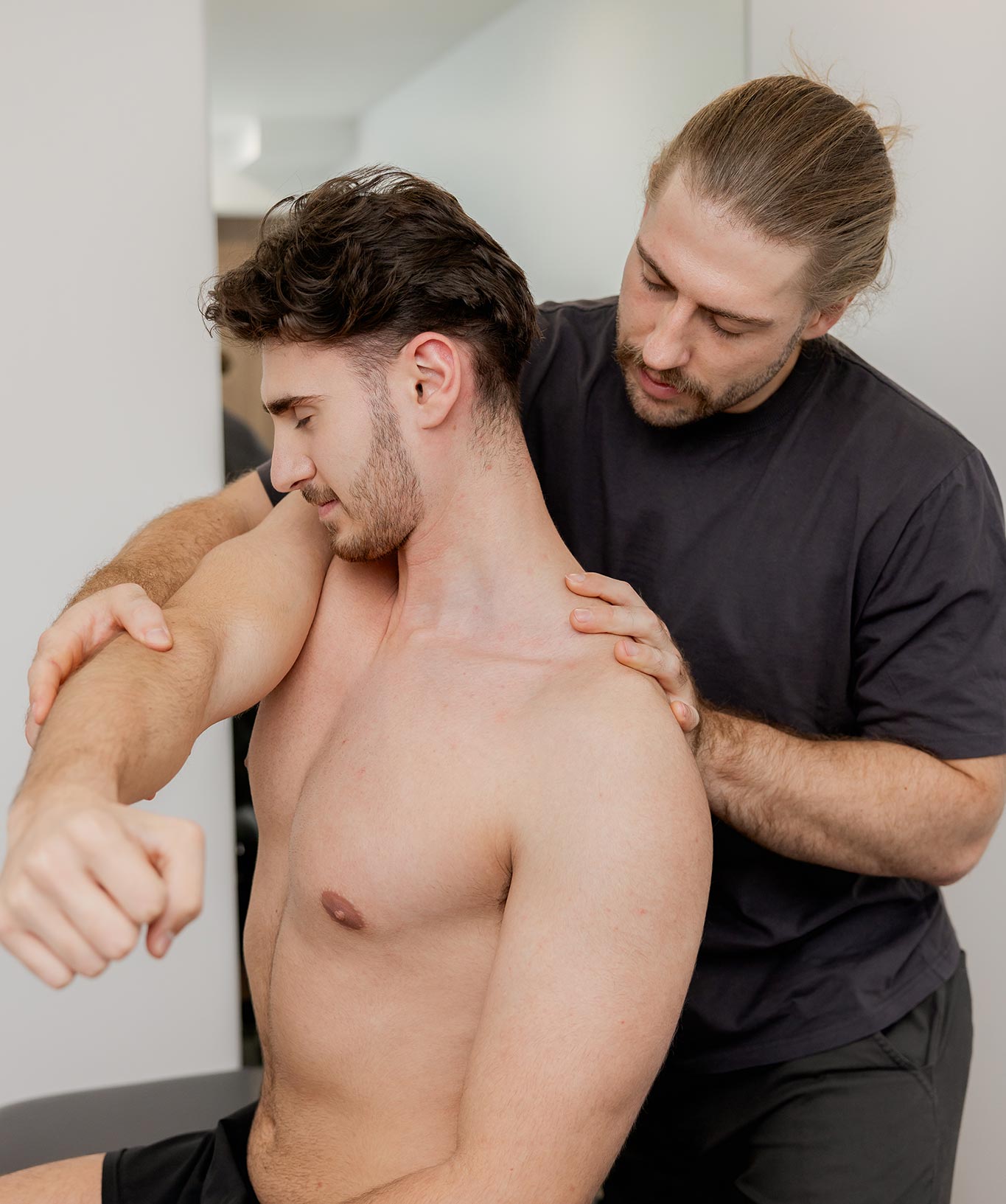
Diagnosis is usually clinical but support from ultrasound or MRI scans is sometimes useful. Typically speaking, treatment is conservative, combining anti-inflammatory medication, physical modalities such as heat or cold therapy, joint mobilization, and muscular stretching. At Continuum Health & Performance, we are able to provide high-level laser therapy to the effected joint reducing pain, inflammation and helping to repair damaged tissue. We often see that when applied, we create a “window of opportunity” of reduced pain and improved mobility whereby your prescribed exercises have added benefit.
It’s important to note that Frozen shoulder is a condition that can be managed and controlled with proper diagnosis and treatment. With the help of a healthcare professional, you can get back to the activities you love without being held back by shoulder pain and stiffness.
Working with you on frozen shoulder pain
- Goals: Pain relief, improved mobility, better posture and become more functional.
- Problems: What are you experiencing? What is limiting you? How does this impact your life?
- Diagnosis: An in-depth diagnosis following a comprehensive history and examination including in-clinic orthopedic, neurological and functional assessments.
- Design: Your own personalised treatment plan. No one person is the same and you’re not a textbook. Our goal is to arm you with knowledge and awareness so you can better understand your body.
- Doing: Implementing of our modern treatment framework, which is designed to assist you in your recovery.
Let's Talk ...
Shop 3B/9 George St, North Strathfield NSW 2137
Monday 8am - 6pm
Tuesday 8am - 7pm
Wednesday 8am - 6pm
Thursday 8am - 8pm
Friday 8am - 5:30pm
Saturday 7am - 1:30pm

Frequently Asked Questions: Frozen Shoulder
What causes frozen shoulder?
Frozen shoulder (adhesive capsulitis) occurs when the shoulder joint capsule becomes thickened and inflamed, leading to scar tissue formation. The exact cause is often unknown, but it’s more common in people with diabetes, thyroid conditions, or those who have had prolonged shoulder immobilisation after injury or surgery.
How long does frozen shoulder last?
Frozen shoulder typically progresses through three stages: freezing (2–9 months), frozen (4–12 months), and thawing (5–24 months). While many cases resolve naturally over 1–3 years, treatment can significantly reduce pain and shorten recovery time.
What is the difference between frozen shoulder and a rotator cuff injury?
A rotator cuff injury involves damage to the muscles and tendons surrounding the shoulder joint, causing weakness and pain with specific movements. Frozen shoulder causes global restriction of all shoulder movements due to capsule tightening — both active and passive range of motion are reduced. Accurate diagnosis is essential.
Can chiropractic help with frozen shoulder?
Yes. Chiropractic care for frozen shoulder includes joint mobilisation, soft tissue therapy, dry needling, and a guided exercise program to restore movement. At Continuum Health & Performance we work progressively through each stage to reduce pain and improve function as quickly as possible.
What can I do at home for frozen shoulder pain?
Gentle pendulum exercises, assisted shoulder stretches within a pain-free range, and applying heat before movement can help maintain mobility. Avoid forcing through stiffness, as this can worsen inflammation. Your chiropractor will guide you on safe home exercises tailored to your current stage.
How We Treat Frozen Shoulder
At Continuum Health & Performance, we use a combination of evidence-based treatments tailored to your condition and goals. Relevant treatments for frozen shoulder include:
Further reading: Curious how common frozen shoulder is? Read our guide to frozen shoulder statistics in Australia — including who is most at risk and how long recovery typically takes.
Related Conditions We Treat