



BPPV (vertigo) treatment
Are you experiencing dizziness as a result of BPPV?
Schedule an Appointment
Who this is for
Positional spinning, BPPV-type dizziness, or vertigo you want assessed here. Book Matthew Hayward (AHPRA CHI0002229834), Tanya Nakhl (AHPRA CHI0002698406), or Misha Burjan (AHPRA CHI0002598017). Tanya books on a general type – never pregnancy care. We screen first. If it is not BPPV-appropriate, we will not treat and we will refer.
What happens in a visit
How long is the appointment? Book the appointment type that matches what you need. Acute BPPV-style visits usually run about 30 minutes. Longer vestibular or vertigo consults usually run about 45 – 60 minutes. Not sure which fits? Call 0421 151 778.
Will I be treated today? Usually yes when the screen says canalith repositioning or other care here is appropriate in that visit. Once Matthew, Tanya, or Misha take a comprehensive history and check you’re safe to treat, they can get started in the same visit. If it is not BPPV-appropriate, we stop and point you to the right next step.
What will you do? Matthew, Tanya, or Misha will take a comprehensive history and examination and screen first before anything hands-on. For classic positional spinning, that can include assessment plus canalith repositioning when it fits – you will feel the room move during testing and treatment, and that is expected. For dizziness that is not a clear short spin, keeps returning, or needs a broader look, the longer consult covers a fuller assessment, then canalith work, other care here, or a referral out.
What happens when I finish the appointment? You’ll leave with an understanding of what they found, what to do for the next day or two when a manoeuvre was done, whether follow-up or your GP or another clinician is the safer next step, and a next date if you need one.
What we won’t do. We won’t treat if it is not BPPV-appropriate, force a manoeuvre that does not fit, or promise the vertigo will settle or be cured.
Book Matthew Hayward, Tanya Nakhl, or Misha Burjan, or call 0421 151 778.
BPPV, or Benign Paroxysmal Positional Vertigo, is a common condition that affects the inner ear and causes dizziness or a spinning sensation – primarily felt more on one side than the other. The inner ear is responsible for transmitting information to the brain about the position and movement of the head. When small calcium crystals (otoconia) that are normally found in the inner ear become dislodged, they can float in the semi-circular canals of the inner ear and interfere with normal function. This results in the brain receiving conflicting signals from the inner ear and the eye, causing vertigo, or a spinning sensation.
How BPPV begins is not well understood, but it is thought to be related to aging, head injury, or inner ear disorders such as Meniere’s disease or vestibular neuritis. BPPV can also occur as a result of viral infections or other illnesses that affect the inner ear, as well as recent whiplash and plane travel.
The symptoms of BPPV include vertigo, dizziness, unsteadiness, and in some cases, nausea and vomiting. The vertigo is usually triggered by changes in head position, such as turning over in bed, looking up or down, or tilting the head. The dizziness and vertigo can last for a few seconds to several minutes and can be quite debilitating.
Acute and Chronic BPPV Dizziness Treatment
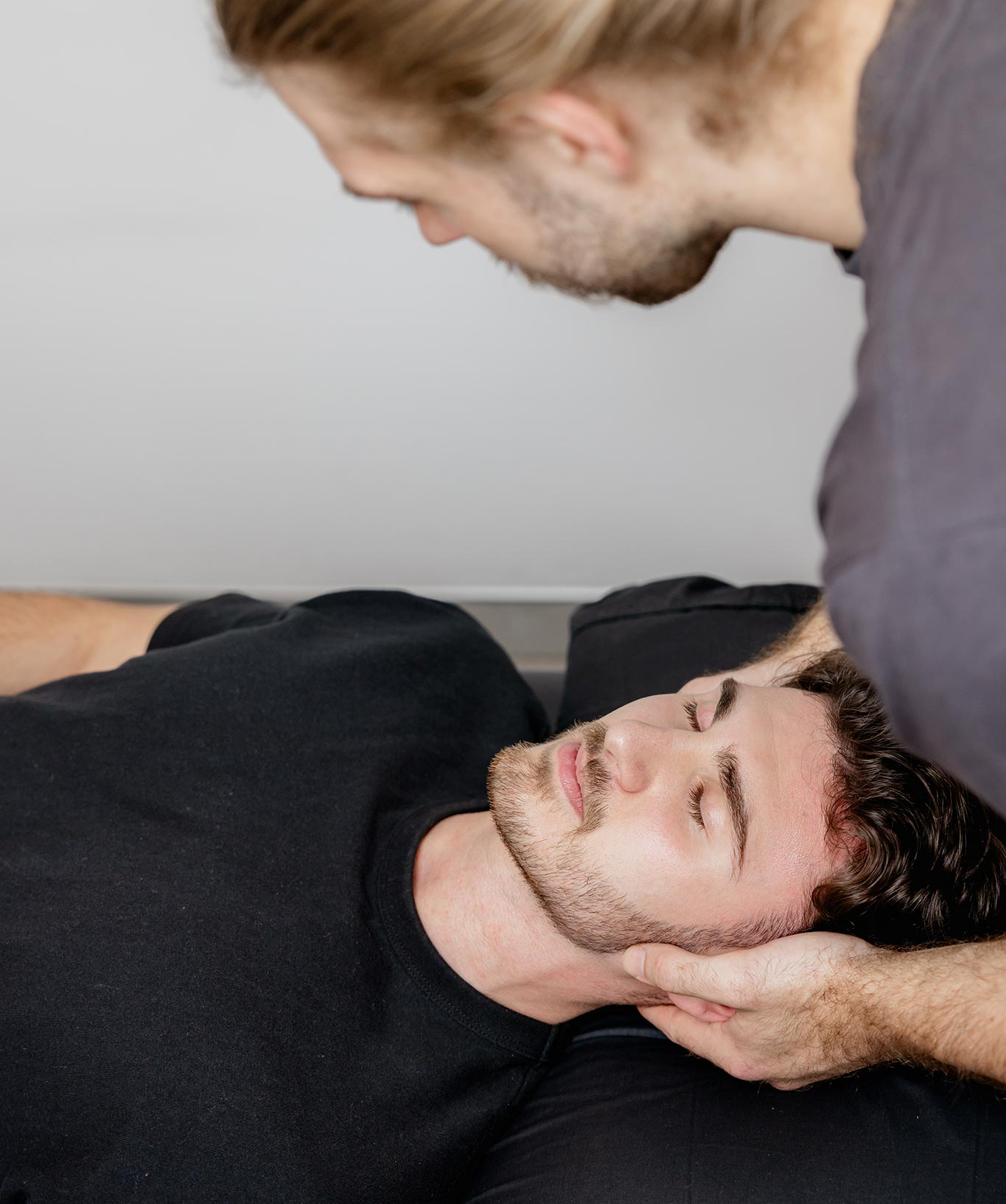
The most effective acute treatment for BPPV is a specific movement called the Epley Manoeuvre. This procedure involves specific head and body movements that help to reposition the displaced calcium crystals back to their proper location in the inner ear. The Epley manoeuvre can usually be performed in our clinic and does not require any special equipment – this manoeuvre should not be attempted at home by yourself as it requires specific training to ensure a safe application. In some cases, BPPV may resolve on its own without treatment, but this can take several weeks or months.
Following resolution of the dizziness caused by BPPV, our practitioners will undergo a comprehensive assessment with you and create a program to help improve your balance and reduce the likelihood of further dizziness episodes.
Working with you on BPPV
- Goals: Dizziness relief, improved focus, better posture and reduced flare ups.
- Problems: What are you experiencing? What is limiting you? How does this impact your life?
- Diagnosis: An in-depth diagnosis following a comprehensive history and examination including in-clinic orthopedic, neurological and functional assessments.
- Design: Your own personalised treatment plan. No one person is the same and you’re not a textbook. Our goal is to arm you with knowledge and awareness so you can better understand your body.
- Doing: Implementing of our modern treatment framework, which is designed to assist you in your recovery.
Let's Talk ...
Shop 3B/9 George St, North Strathfield NSW 2137
Monday 8am - 6pm
Tuesday 8am - 7pm
Wednesday 8am - 6pm
Thursday 8am - 8pm
Friday 8am - 5:30pm
Saturday 7am - 1:30pm
How We Treat BPPV (Vertigo)
At Continuum Health & Performance, we use a combination of evidence-based treatments tailored to your condition and goals. Relevant treatments for bppv (vertigo) include:
Frequently Asked Questions: BPPV (Vertigo)
What is BPPV and what causes it?
Benign Paroxysmal Positional Vertigo (BPPV) is the most common cause of vertigo, occurring when tiny calcium crystals (otoconia) in the inner ear become dislodged and move into the semicircular canals. This triggers brief episodes of dizziness when you change head position – such as rolling over in bed, looking up, or bending forward.
How is BPPV diagnosed?
BPPV is diagnosed using the Dix-Hallpike test, a simple positional manoeuvre performed in clinic. Your practitioner observes your eye movements (nystagmus) as your head is moved into specific positions. This takes only a few minutes and identifies which ear and canal is affected, guiding the exact treatment needed.
How is BPPV treated?
The most effective treatment is the Epley manoeuvre – a series of guided head movements that reposition the dislodged crystals. Most people experience significant improvement within 1 – 2 sessions. Success rates are 80 – 90%, and the procedure is painless and non-invasive.
How long does BPPV last without treatment?
Without treatment, BPPV can persist for weeks to months and often recurs unpredictably. With repositioning manoeuvres, most people experience rapid relief – often within the first session. Treating it promptly also reduces the risk of falls, particularly in older adults.
Can BPPV come back after treatment?
Yes, BPPV recurs in approximately 15 – 30% of people within one year. Recurrences are usually straightforward to treat again with the same repositioning techniques. Risk factors for recurrence include vitamin D deficiency, osteoporosis, and previous head trauma.
Related Conditions We Treat