



Patellofemoral pain treatment
Are you experiencing pain in your knee and recently been diagnosed with patella-femoral syndrome?
Schedule an Appointment
Patello-Femoral Syndrome (PFS) is a group of morpho-functional alterations that results in the onset of anterior knee pain. It is caused by a small alteration of form or function in one of the components that make up the patello-femoral joint, such as the patella, femur, cartilage, or muscle groups like the patellar tendon and alar ligaments. When one of these components is not functioning properly, it increases the pressure on the patello-femoral joint, leading to pain or even instability, which can cause the patella to dislocate.
Patello-Femoral Syndrome Pain Treatment
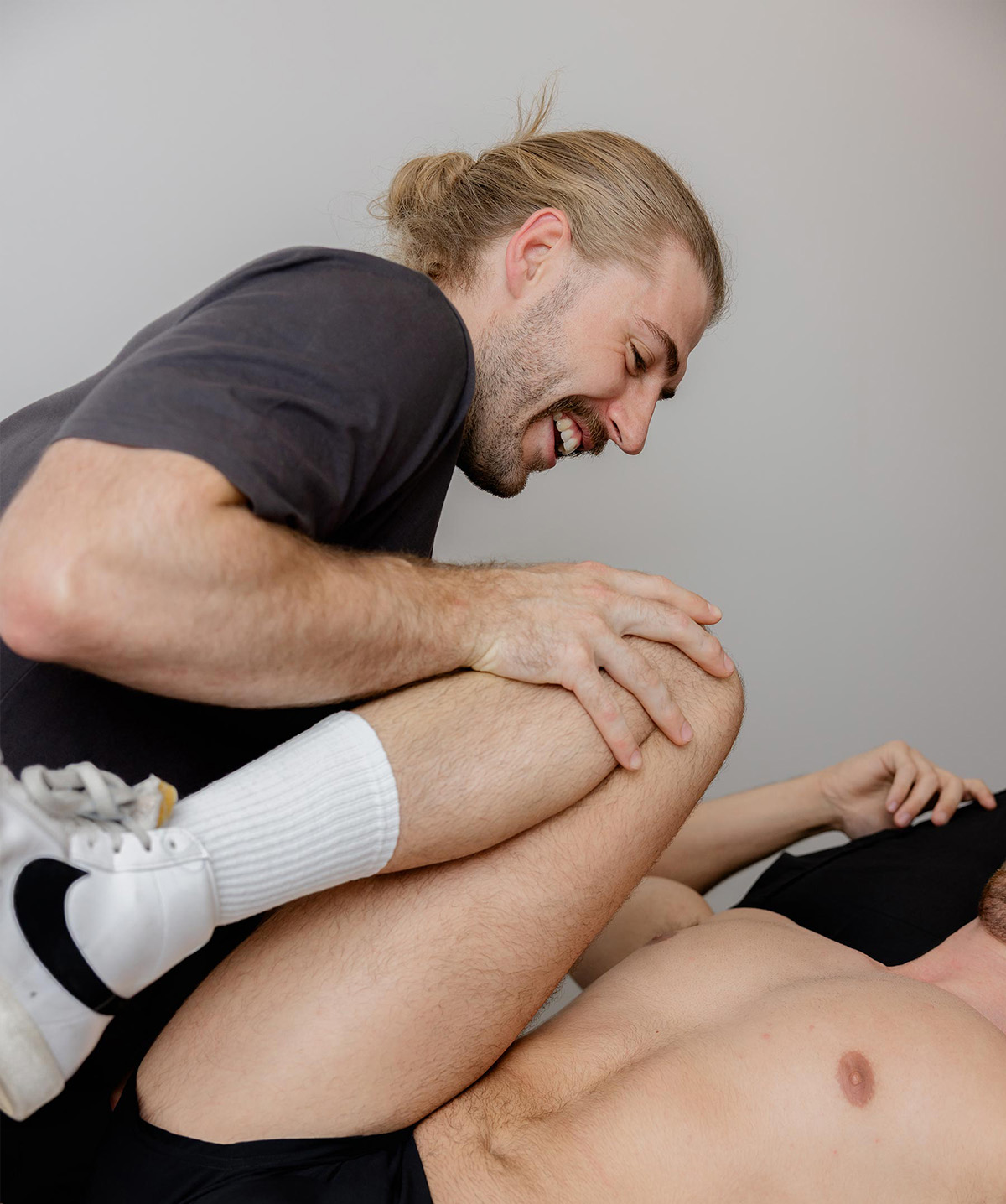
Diagnosis of PFS can be carried out in-clinic. Treatment for PFS typically begins with rehabilitation exercises, myofascial release, dry needling and myofascial cupping, followed by changes to daily activities to maintain full functionality. Surgery is only considered for patients with major patellar instability, characterized by habitual dislocation of the patella or its ongoing malposition. However, it should be noted that the vast majority of PFS cases are resolved clinically through the above-mentioned treatments.
If you have undergone surgery for PFS recently or in the past, it is imperative that you are consistent with post-surgical rehabilitation. Rehabilitation aims to restore full function in the knee by resolving the inflammation, recovering the range of motion, building muscle strength, and finally, more sophisticated movements used in everyday life or the patient’s chosen sport. It’s essential for people experiencing pain or discomfort on their knee joint to seek medical attention and get a proper diagnosis, as early intervention can prevent the condition from worsening and help you regain your knee mobility.
Working with you on patella-femoral syndrome pain
- Goals: Pain relief, improved mobility, better posture and become more functional.
- Problems: What are you experiencing? What is limiting you? How does this impact your life?
- Diagnosis: An in-depth diagnosis following a comprehensive history and examination including in-clinic orthopedic, neurological and functional assessments.
- Design: Your own personalised treatment plan. No one person is the same and you’re not a textbook. Our goal is to arm you with knowledge and awareness so you can better understand your body.
- Doing: Implementing of our modern treatment framework, which is designed to assist you in your recovery.
Let's Talk ...
Shop 3B/9 George St, North Strathfield NSW 2137
Monday 8am - 6pm
Tuesday 8am - 7pm
Wednesday 8am - 6pm
Thursday 8am - 8pm
Friday 8am - 5:30pm
Saturday 7am - 1:30pm

How We Treat Patellofemoral Pain
At Continuum Health & Performance, we use a combination of evidence-based treatments tailored to your condition and goals. Relevant treatments for patellofemoral pain include:
Frequently Asked Questions: Patellofemoral Pain Syndrome
What is patellofemoral pain syndrome?
Patellofemoral pain syndrome (PFPS) — also called runner’s knee — is pain arising from the joint between the kneecap (patella) and the thighbone (femur). It’s one of the most common knee complaints, affecting runners, cyclists, and those who sit for long periods. Pain is typically felt around or behind the kneecap and worsens with stairs, squatting, and prolonged sitting.
What causes patellofemoral pain?
PFPS occurs when the patella doesn’t track properly in its groove, creating abnormal stress on the joint surface. Contributing factors include weak hip and thigh muscles (particularly the VMO and glutes), poor foot biomechanics, overtraining, and tight lateral structures. It is typically multifactorial.
Does patellofemoral pain go away on its own?
PFPS rarely resolves without addressing the underlying cause. Rest may temporarily reduce pain, but without rehabilitation it tends to recur when activity resumes. Addressing muscle weakness and movement patterns through targeted exercise is the most effective long-term strategy.
What exercises help patellofemoral pain?
Hip strengthening (particularly glutes and hip abductors), quadriceps strengthening with emphasis on VMO control, and calf strengthening form the foundation. Exercises like single-leg squats, step-downs, clamshells, and Romanian deadlifts are commonly prescribed. Starting pain-free and progressively loading is key.
How long does patellofemoral pain syndrome take to recover?
With consistent rehabilitation, most people see significant improvement within 6–12 weeks. Full resolution and return to unrestricted sport may take 3–6 months. Recurrence is common without addressing contributing factors like hip weakness and training load management.
Related Conditions We Treat