



Headaches from the neck or jaw: assessment in North Strathfield
Headaches that start at the base of your skull, sit at your temples or build through a day at the desk can make work and sleep hard going. We start with a careful assessment of your neck, jaw and how you sit and move, explain what we find in plain English, and build a plan around that. If your headaches need a medical workup first, we will refer you to your GP.
Matt Hayward and Misha Burjan see people with headaches. Book with one of them, not with the wider team.
- No GP referral needed
- HICAPS on site
- Open Saturday mornings
See a GP, or call 000, first if
These signs are uncommon, but they need a doctor first. Call 000 or go to your nearest emergency department straight away if you have:
- A sudden, severe headache, the worst you have ever had, or one that comes on like a thunderclap.
- Weakness, numbness, a drooping face, slurred speech, confusion, a seizure, or a change in vision or balance.
- A headache with fever and a stiff neck, or with a rash.
- A headache after a head injury.
See your GP before booking with us if:
- Your headaches are new and you are over 50, or the pattern has changed, become more frequent or got worse.
- Headaches wake you from sleep, or are worse when you lie down, cough or strain.
- You are pregnant, or have recently had a baby, and this headache is new.
- You have a history of cancer or a weakened immune system.
- You are taking pain medication for headaches on many days each month.
If we notice any of these at your visit, we will refer you before starting treatment.
What these headaches are, in plain words
Headaches have many causes. Some are primary, meaning the headache is the main problem. Others are secondary, meaning something else is driving them. A careful history and examination help us work out whether your neck or jaw is part of the picture, and when you need your GP first (healthdirect).
The patterns we assess most often are:
- Tension-type headache: a dull or tight, band-like feeling across the forehead, the sides or the back of the head, often with tight muscles in the neck and shoulders. Long hours at a screen, stress and poor sleep are common triggers.
- Cervicogenic headache: a headache that comes from the neck. It is often on one side, starts at the back of the head or neck and spreads forward, and can be worse with certain neck positions or movement.
- Headaches linked to the jaw: pain at the temples or in the face, often with clenching, grinding or a tight jaw, sometimes alongside a stiff neck.
Migraine is a separate condition. It is often a throbbing pain on one side, and can come with nausea or sensitivity to light and sound. It is diagnosed and managed by your GP, and sometimes a neurologist. Some people with migraine also have neck or jaw pain that sits with their headache days. We can assess that part. We do not treat migraine itself.
Cluster headaches, sinus headaches and headaches from medication overuse need medical assessment, so see your GP if that sounds like you. The “Common types of headaches” card below has more on those patterns.
If a stiff or sore neck is your main problem, start with the neck pain card. If clicking, locking or clenching is the main problem, start with the TMJ card and book Matt.
Why they keep coming back
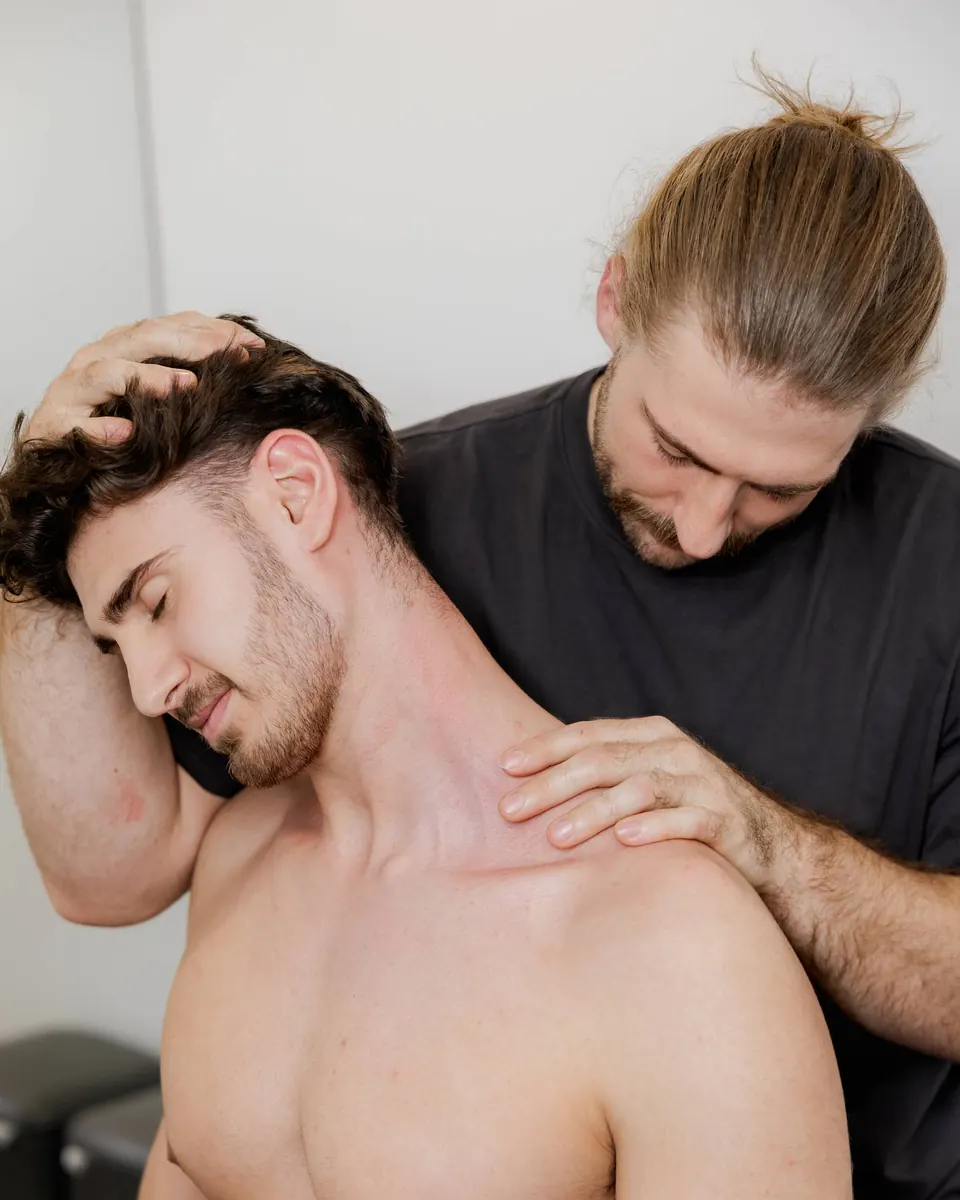
Neck-related and tension-type headaches often follow load: a long day in one position, a week of poor sleep, a stressful month or a habit of clenching. Pain medication can settle a headache for a while, but it does not change those drivers, so the headache can return. The assessment looks at your neck and jaw, and at how you work, sleep and move, not only at where it hurts today.
How we assess
Your story first: where the headache sits, how often it comes, how long it lasts, what sets it off, what you have already tried, and what your GP has said.
Neck movement and muscle testing, including whether moving or pressing on parts of your upper neck reproduces your familiar headache.
Jaw and upper back checks where they are relevant.
Screening for warning signs: if you need your GP, imaging or another clinician first, we refer you before starting anything hands-on.
What a first visit looks like
- 1
History and assessment with Matt or Misha.
- 2
A plain-English explanation of what we found, and how confident we are that your neck or jaw is involved.
- 3
Treatment in the same visit when it is safe and appropriate.
- 4
A plan for home, work and your desk, and a date to review your progress.
What we may use
Depending on your assessment, your plan may include:
- Chiropractic adjustments or mobilisation of the joints of your neck and upper back. Manipulation is optional, and your chiropractor will use other options if you prefer.
- Soft tissue work around your neck, shoulders and jaw.
- Dry needling, one optional tool within a visit, used after screening.
- Exercise and desk advice: a small number of exercises that progress over time, with practical changes to how you sit, sleep and move.
Questions about headaches
Most recurring headaches are not, but some are. We screen first using the list above, and refer you to your GP if anything does not fit a neck, jaw or tension pattern.
Yes, if you also have neck or jaw pain you would like assessed. Migraine itself stays with your GP or neurologist. We do not treat migraine, and we will refer you back if that is the main problem.
Usually not. If we think imaging would change your care, we will explain why and refer you. Bring any recent reports you have.
No. You can book directly with Matt or Misha, and we are happy to keep your GP in the loop.
Do not change any medication without talking to your GP or pharmacist. Medication decisions stay between you and your doctor.
We screen you first, and no treatment is completely free of risk. We explain what we suggest and why, and you decide. Neck manipulation is optional.
We will not give you a number before we have assessed you. You get a plan and a review point. If it is not working, we change the plan or refer you on.
If your extras cover includes chiropractic, you can claim on the spot with HICAPS and pay only the gap. Rebates depend on your fund and policy, so check with your insurer.
Related pages
Common types of headaches
tension, migraine, cluster, sinus and neck-related headaches, and when to get help.
Who you will see
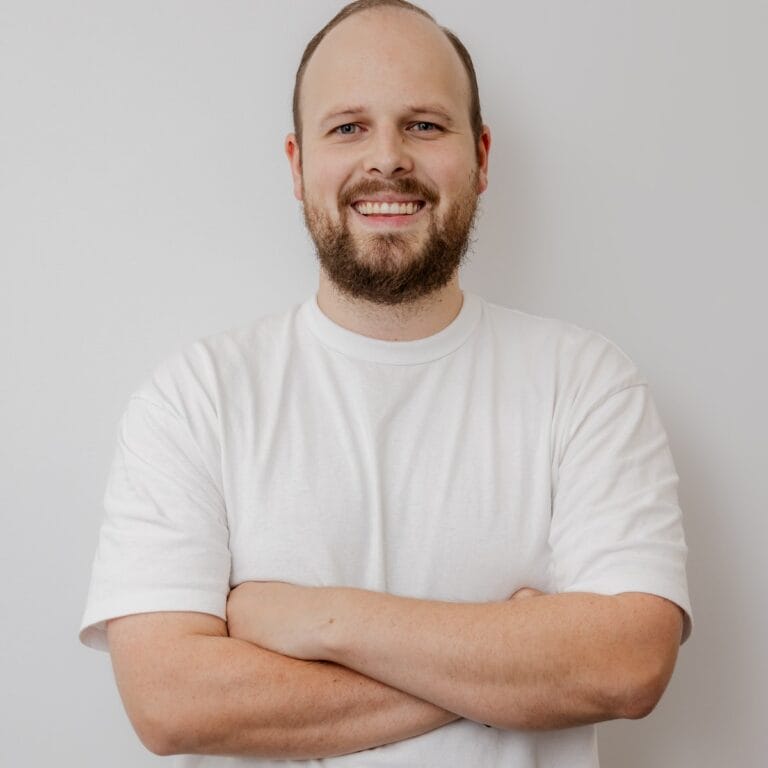
Matthew Hayward
principal chiropractor
In healthcare since 2013. Sees spinal complaints, sports and training injuries, jaw (TMJ) pain, headaches and BPPV. AHPRA CHI0002229834.

Misha Burjan
chiropractor
A lifelong athlete and avid climber. Sees shoulder injuries, spinal complaints, sports rehab, strength training injuries, headaches and BPPV. AHPRA CHI0002598017.
Getting here
Continuum Health & Performance, Shop 3B, 9 George St, North Strathfield NSW 2137, at street level in the Bakehouse Quarter.
- By car: 1.5 hours free parking across the road.
- By train: North Strathfield station is in the same precinct.
- Hours: Monday 8am to 6pm, Tuesday 8am to 7pm, Wednesday 8am to 6pm, Thursday 8am to 8pm, Friday 8am to 5:30pm, Saturday 7am to 1:30pm. Closed Sunday.